You Have the Right Words. Now Learn to Say Them With Confidence.
Get a free, practical guide with 4 proven techniques, a real-life story and a rehearsal script to help you speak up in meetings and everyday situations.
Speak up in meetings
Express your ideas clearly
Build confidence step by step
Does this sound familiar?
Many capable people struggle to put their thoughts into words, even when they know what to say.
You know what to say, but stay silent in meetings.
You overthink how others will judge you.
Your mind goes blank when it's your turn to speak.
Why does this happen?
Communication confidence is not just about personality. It's a habit, and it can be learned.
Overthinking and fear of judgement
Unclear thoughts or not structure
Lack of practice in real situation
Past experiences affect your confidence
Why I created this guide
I have personally worked on my communication skills and confidence, and I created this guide to share some of the practical things that helped me along the way.
I have made this guide compact and easy to implement so you can take your first steps towards speaking with more confidence, at work, in meetings, and in everyday conversations.
No complicated theory. Just practical ideas you can start exploring.
----- FREE RESOURCE -----
Get Your Free Confidence Starter Kit
I have personally worked on my communication skills and confidence, and I created this guide to share some of the practical things that helped me along the way.
I’ve kept it short and practical, so you can go through it even if you don’t have much time.
What's inside the guide ?
Multiple practical techniques for speaking with confidence
A real-life example
of before and after
A simple rehearsal script
you can use before next meeting
Take a quick look inside
Here are a few titles from the guide:


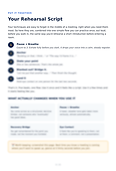
**No Spam ** Free Guide ** Feel confident in office meetings
Sound familiar?
You had the point ready. Someone else said it first; and got the credit. You've rehearsed a sentence five times in your head, only to say something shorter and weaker out loud. You've stayed quiet in a meeting not because you had nothing to say, but because you weren't sure how it would land.
It's Not Your Personality. It's a Habit.
Most people assume communication confidence is something you're born with. It isn't. It's built from small, specific habits, how you open a sentence, how you recover when you blank, how you carry yourself when you speak. Change the habits, and the confidence follows.
Inside the free guide: 4 techniques, one real story, a rehearsal script
• The 3-second pause — why it sounds composed, not filler
• The recovery bridge — for when your mind blanks mid-sentence
• A ready-to-use rehearsal script for your next meeting
No spam. One practical guide, straight to your inbox.
Common Mistakes to Avoid
Speaking too fast when nervous
Interrupting to hold your point
Over-using filler words
Avoiding eye contact
Frequently Asked Questions
Q1. Can communication skills really be learned, or is it just personality? Ans. Learned, almost entirely. Confidence in speaking is a set of specific habits, not a fixed trait. Q2. How long does it take to see a difference? Ans. Most people notice a shift within 1-2 weeks of consistently practicing even one technique. Q3. Can introverts become confident communicators? Ans. Yes, introversion affects energy, not communication skill. Some of the most effective communicators are introverts who've built strong, deliberate habits. Q4. Is this only for public speaking, or everyday conversations too? Ans. Both. The same core habits — pacing, structure, recovery — apply whether you're presenting to 50 people or speaking up in a 5-person meeting.